The best night shift food ideas are simple: a real meal before your shift, light snacks built on protein and fiber during it, and a small breakfast before you sleep. Skip the sugary vending run at 3 a.m., keep caffeine to the first half of the shift, and keep water within reach all night.
For employers, the hard part is availability. When the cafeteria closes at 2 p.m., second and third shift workers end up eating from a gas station or a machine full of chips. Below is what the research says workers should eat and when, followed by practical ways to keep real food on site around the clock.
Who works nights, and why food timing matters
Off-hours work is more common than many managers assume. The latest Job Flexibilities and Work Schedules release from the Bureau of Labor Statistics, covering 2024 and 2025, found that 15 percent of wage and salary workers usually worked a non-daytime schedule, including 3 percent who worked nights. In the transportation and utilities industry, the share was 25 percent.
The body does not reset just because the schedule says it is noon. The shift work training from NIOSH, the CDC's workplace safety institute, notes that night workers often eat when the digestive system is prepared for sleep. Over time that raises the risk of stomach problems, obesity, cardiovascular disease, diabetes and metabolic syndrome. What you eat matters, but when you eat matters just as much.
When should night shift workers eat?
NIOSH's guidance boils down to a few rules. Keep a normal pattern of three meals per 24 hours. Avoid eating, or eat less, between midnight and 6 a.m. Avoid large meals in the 1 to 2 hours before your main sleep, but do eat a small breakfast before day sleep so hunger does not wake you up.
Here is how that can look for a typical 10 p.m. to 6:30 a.m. shift:
| Time | What to eat | Why |
|---|---|---|
| 6 to 7 p.m. | Main meal: lean protein, vegetables, whole grains | Your biggest meal lands while your body still expects food |
| 10 p.m. to midnight | Light meal: wholegrain sandwich, vegetable soup or a salad with protein | Fuel for the first half of the shift |
| Midnight to 6 a.m. | Small snacks only: fruit, yogurt, nuts, a hard-boiled egg | Less food during the hours NIOSH flags |
| 7 to 8 a.m. | Small breakfast: yogurt and fruit, or toast and an egg | Keeps hunger from waking you during day sleep |
Second shift workers, roughly 3 p.m. to 11:30 p.m., have it easier. Eat lunch before you clock in, plan a real dinner at your meal break, and keep the after-shift snack small so it does not cut into sleep.
Night shift food ideas that keep energy steady
NIOSH recommends high-quality foods during the shift: vegetables, salads, vegetable soups, fruit, wholegrain sandwiches, yogurt, cheese, eggs, nuts and green tea. It also advises complete meals that pair protein (animal products or plant protein like beans) with vegetables or fruit. That combination is far easier on an overnight body than a sleeve of cookies.
Good options that travel well or come out of a cooler ready to eat:
- Grain bowls with chicken, beans or tofu, brown rice and roasted vegetables
- Wholegrain wraps or sandwiches with turkey, egg salad or hummus
- Vegetable soup or chili that reheats in a few minutes
- Greek yogurt with fruit or a cup of cottage cheese
- Hard-boiled eggs, cheese sticks and a handful of nuts for the 3 a.m. slump
- Whole fruit such as apples, bananas, oranges and grapes
- Salads with protein on top, not just lettuce
For more options that hold up in a breakroom, see our guide to healthy office snacks.
What to limit overnight
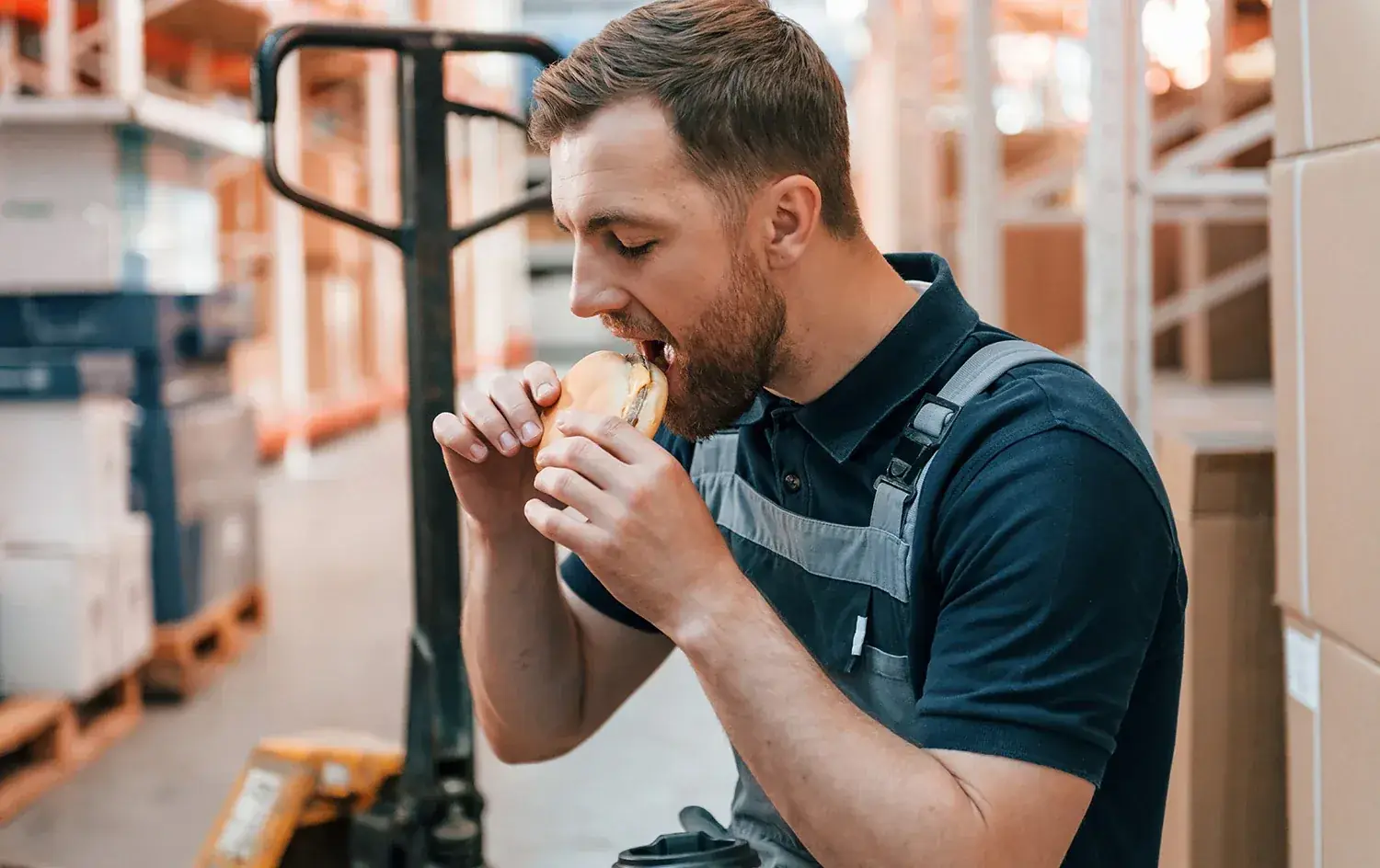
NIOSH says sugar-rich products and low-fiber carbohydrates can increase sleepiness, so avoid them when you need to stay alert. It also recommends skipping alcohol and heavy, fatty or spicy foods. The donut box, the candy bar and the drive-through burrito at 4 a.m. are working against you, even when they feel like a quick lift.
Caffeine timing for night shift workers
Caffeine helps, as long as the timing is right. NIOSH suggests night workers use caffeine near the start of the shift and stop several hours before the shift ends. The reason: caffeine's half-life, the time it takes your body to clear half of it, is 5 to 6 hours, and much longer in some people. A large coffee at 5 a.m. can still be in your system when you try to sleep at 9.
- Have coffee or tea early in the shift, not as a rescue right before the drive home.
- Keep it light. The NIOSH diet suggestions for night workers recommend only light caffeine during the shift, along with avoiding foods with added sugar.
- Count the energy drinks. A few cans over one shift add up quickly, and many bring plenty of sugar with them.
- Try green tea, which is on NIOSH's list of good shift foods.
Hydration on the overnight shift
Thirst is easy to ignore at 2 a.m. when the line is moving. The CDC's guidance on water and healthier drinks points out that water prevents dehydration and has no calories, while sodas, fruit drinks and similar beverages carry calories with little nutritional value. Its simplest tip: carry a reusable water bottle.
Heat changes the math. Metro Atlanta warehouses and loading docks can stay hot well after sunset in July and August. For moderate activity in the heat lasting under 2 hours, the NIOSH heat stress recommendations call for 1 cup (8 ounces) of water every 15 to 20 minutes. They also say to avoid alcohol and drinks high in caffeine or sugar, and to switch to sports drinks with balanced electrolytes when sweating lasts several hours.
How employers can offer real food 24/7 when the cafeteria is closed
Telling night workers to eat yogurt and grain bowls does not help if the only option on site is a machine full of chips and candy. The fix is a food setup that needs no cashier and can hold fresh, refrigerated items. Most sites choose from three options:
| Option | How it works | Good fit |
|---|---|---|
| Micro market | An open self-checkout store with coolers, shelves and a kiosk; employees scan items and pay by card or mobile wallet | Employee-only break areas where staff want a full store |
| AI smart cooler | Tap a card to unlock, grab items, and cameras and sensors charge automatically | Sites with visitors or public access, or tighter spaces |
| Healthy vending | Machines stocked with better-for-you snacks and drinks | A second break area that needs coverage too |
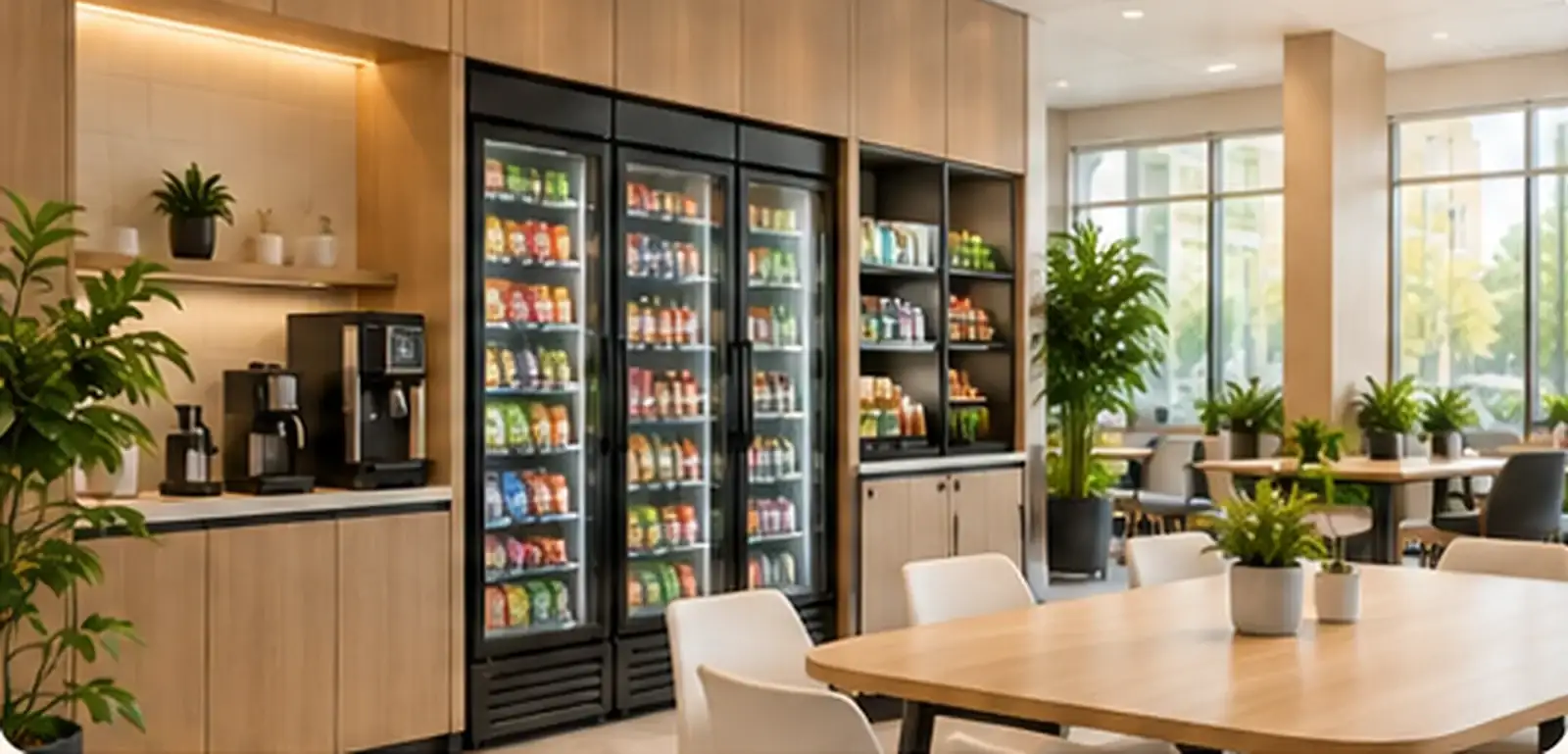
Micro markets and smart coolers can both carry fresh chef-made meals, salads, sandwiches, yogurt and fruit, which lines up closely with the NIOSH list. Because checkout is automatic, the night crew gets the same selection as the day crew without anyone staffing a register.
Make the night shift breakroom actually work
Equipment is only half of it. A few habits make the difference between food that gets eaten and food that sits:
- Stock for the shift, not the office. Night crews in logistics centers and plants often want a full meal at 1 a.m., while a day office wants snacks. Ask each shift what it needs.
- Let workers request items. With VendGO, employees scan a QR code to request products, and requests are filled within 3 days.
- Put food close to the floor. A short break shrinks fast when the food is a long walk away.
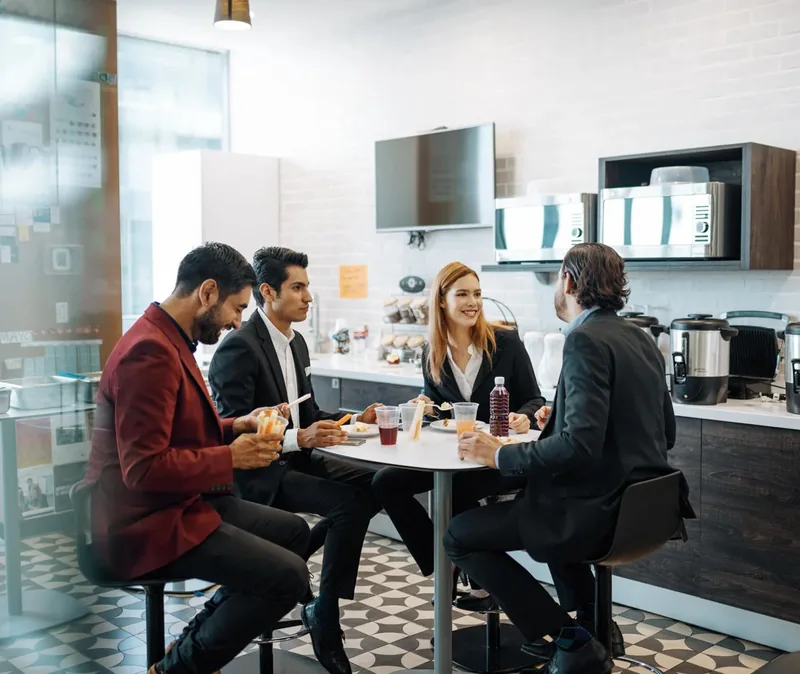
- Give people a place to sit together. NIOSH suggests eating with colleagues in a pleasant setting away from the work area.
- Consider a subsidy. Covering part of the price of healthy items nudges choices and tells night workers they are not an afterthought.
Hospitals know this problem well. When the cafeteria closes, nurses and techs on hospital and healthcare night shifts are left with whatever is in the machine. Plants and warehouses face the same gap, and food access is one of the levers in our guide on how to reduce employee turnover in manufacturing and warehousing.
Feed every shift with VendGO
VendGO is a locally owned breakroom company based in Alpharetta, serving businesses across metro Atlanta. We provide micro markets, AI smart coolers, vending machines and fresh meals with equipment, installation and service at $0 cost to your business, on month-to-month agreements with no long-term contract. Every account gets two dedicated account managers, a two-hour response time when something needs attention, and a two-month trial to see how your night crew uses it.
If your second and third shifts deserve better than a snack machine, request a free consultation or call 678-848-5199. You will talk to the owner, not a call center.
Frequently asked questions
What is the best food to eat on a night shift?
Meals that pair protein with vegetables, fruit or whole grains work best, such as grain bowls, wholegrain sandwiches, vegetable soup, yogurt, eggs and nuts. Limit sugary snacks and low-fiber carbs, which NIOSH says can increase sleepiness.
Should I eat a big meal at 3 a.m. on a night shift?
Try not to. NIOSH advises avoiding or reducing food between midnight and 6 a.m. while keeping three meals per 24 hours, so eat your main meal before the shift and stick to light snacks overnight.
When should night shift workers stop drinking caffeine?
Use caffeine near the start of the shift and stop several hours before it ends. Caffeine's half-life is 5 to 6 hours for many people, so a late cup can still be working when you try to sleep.
How can employers provide food for night shift workers?
A micro market or AI smart cooler stocked with fresh meals, salads and healthy snacks lets workers buy food at any hour without a cashier. Healthy vending can cover a second break area.