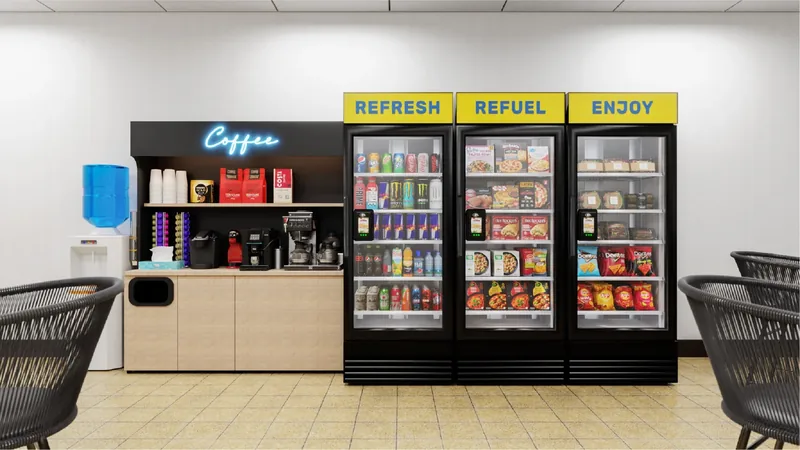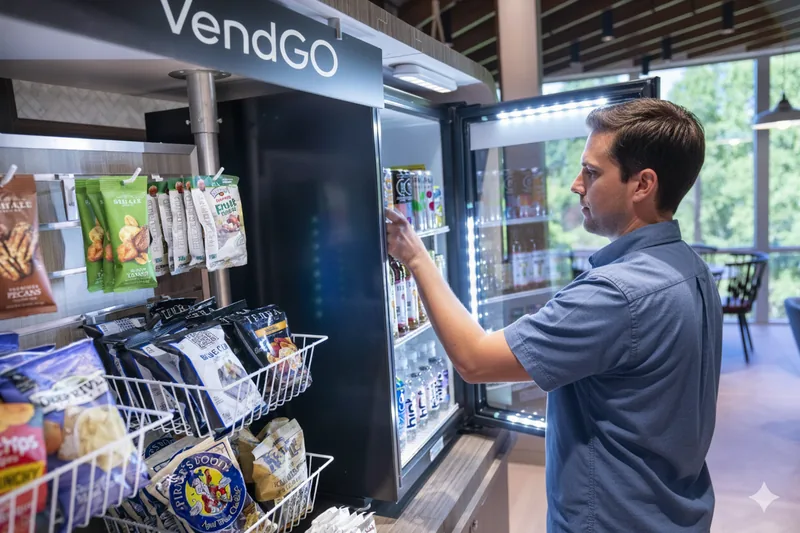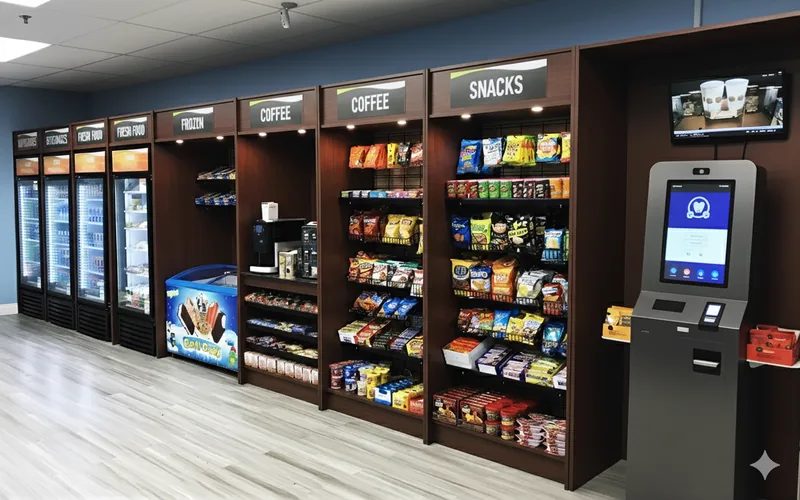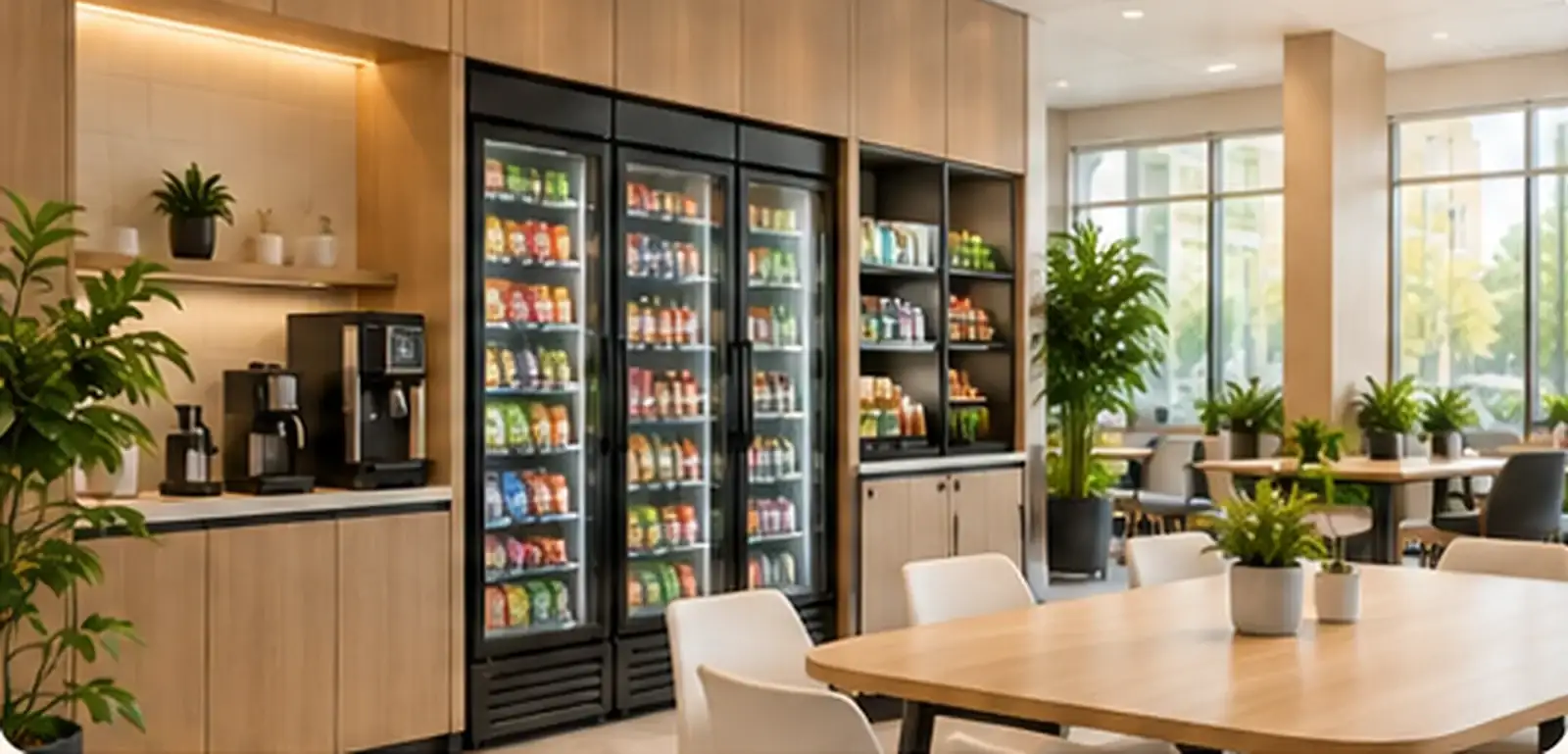
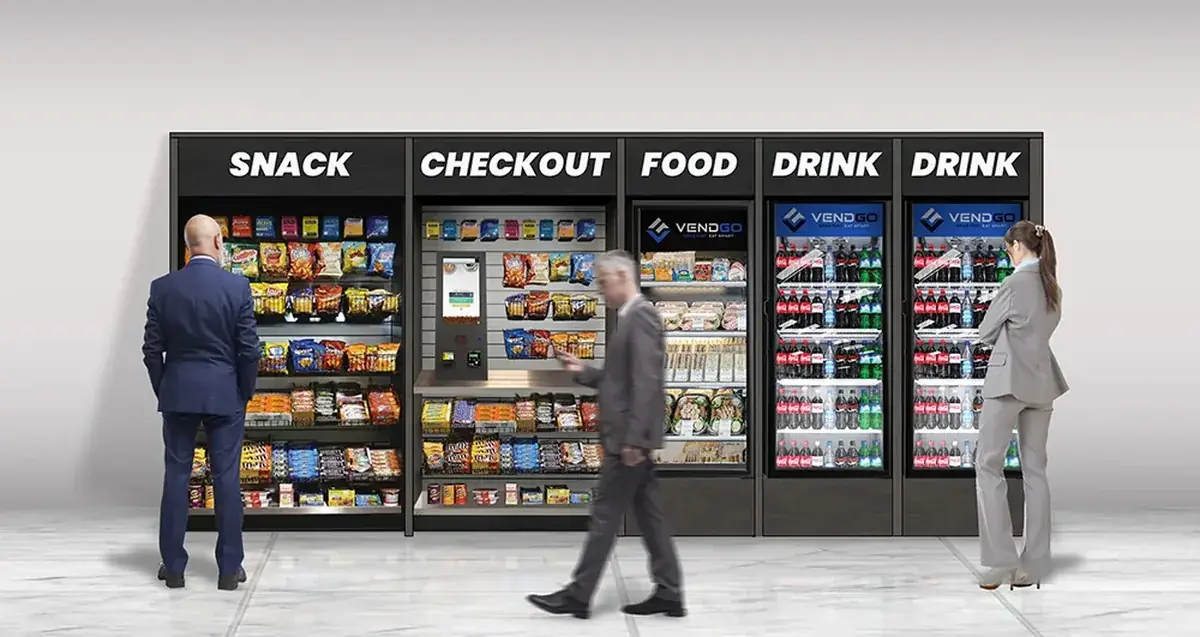
It depends on who owns it. If your company buys and runs its own micro market, you pay for the coolers, the self-checkout kiosk, shelving, software, card processing, inventory and the hours it takes to keep everything stocked, plus whatever walks out unpaid. If a full-service operator runs it, the equipment, installation and service often cost your business nothing, because the operator earns its money on product sales.
That second model is how VendGO works: $0 for equipment, installation and service. The only cost you might choose to take on is a subsidy, where the company pays part or all of the price for employees. Here is what goes into each side of the math.
Two ways to get a micro market
A self-operated market means your company buys or leases the equipment, signs up for market software and a payment processor, buys inventory and assigns someone to run it. You keep the sales revenue, but you also carry every cost and every headache.
A full-service market is placed and run by an operator. The operator owns the equipment, stocks it, handles payments and takes care of repairs. Your part is the space and the input on what employees want. With that model, a micro market comes with no equipment bill to budget for.
What drives the cost if you buy and run your own micro market?
Equipment prices vary widely by size, brand and whether you buy new or used, so get quotes for your exact layout. These are the line items to plan for.
Coolers and freezers
Glass-door commercial coolers are the core of any market, and they run around the clock. ENERGY STAR says certified commercial refrigerators and freezers are on average 20% more energy efficient than standard models, and estimates that a certified glass-door refrigerator saves about 370 kWh and nearly $50 a year. Multiply that across several coolers working through an Atlanta summer, and efficiency is worth paying for upfront.
The kiosk, shelving and security
The self-checkout kiosk handles scanning and payment, and it needs a reliable network connection. Add shelving, signage, a freezer if you want frozen meals, and cameras placed where shoppers can see them. Skimp on security and you pay for it later in lost product.
Software and card processing
Market software tracks sales, inventory and pricing, and it usually comes with a recurring fee. Card processing adds a cost to every sale, and small tickets feel it most. Federal Reserve data show the average interchange fee on regulated debit transactions over dual-message networks was $0.22 in 2023, before any processor markup, while the average debit purchase was $46.26. A breakroom snack is a small fraction of that average purchase, so fixed per-transaction fees take a much bigger bite.
Inventory and spoilage
You buy the stock before anyone buys it from you, and fresh food that does not sell becomes waste. Costs are still climbing for breakroom staples. The USDA Economic Research Service forecasts food-at-home prices to rise 2.3% in 2026, with nonalcoholic beverages up 4.4% and sugar and sweets up 6.5%. Drinks and candy, two breakroom staples, are rising faster than groceries overall.
Labor
Someone has to order product, stock and rotate it, check dates, clean the coolers, reconcile counts and call for repairs. That is real payroll. The Bureau of Labor Statistics put the median wage for coin, vending and amusement machine servicers at $21.63 an hour in May 2023, with a mean of $22.99 an hour in the Atlanta-Sandy Springs-Roswell metro area. Even a few hours a week adds up over a year.
Shrink
Open shelves mean some loss from theft, mis-scans and expired product. When you own the market, every missing item comes out of your margin. Our guide to preventing micro market theft covers how to keep that number low.
Self-operated vs full-service: a cost comparison
| Cost item | Company buys and runs it | Full service with VendGO |
|---|---|---|
| Coolers, freezers and shelving | You buy or lease | $0 |
| Self-checkout kiosk | You buy or lease | $0 |
| Installation | You pay | $0 |
| Software and card processing | Recurring fees plus per-sale costs | Handled by VendGO |
| Inventory and spoilage | You buy the stock and absorb the waste | Handled by VendGO |
| Stocking, cleaning and repairs | Your staff's time | Service included at $0, with a two-hour response time |
| Commitment | Equipment purchase, lease or financing | Month-to-month, with a two-month trial |
| Employee prices | You set them | Optional subsidy, partial or full |
How can a micro market cost the business $0?
An operator makes money the same way a convenience store does: on the margin of each item sold. That is why a full-service operator can place coolers, a kiosk and shelving at no charge. The operator is betting that a well-stocked market in a good location will sell enough to cover the equipment and service over time.
The same logic applies to vending machines and smart coolers. For the details on how no-cost placement works and what to ask before you sign anything, read our guide to free vending machine placement for businesses.
At VendGO, equipment, installation and service cost your business $0. Agreements are month-to-month with no long-term contract, every account gets two dedicated account managers, and the response time is two hours when something needs attention.
Subsidies: the one optional cost
A free market means free to install, not free food. Employees pay for what they take. If you want the market to be a bigger benefit, you can subsidize prices partly or fully through a subsidized market or vending program.
A subsidy is the one line item you control, so set it on purpose. Decide whether you want to cover all of the price or a share of it, and settle on a monthly budget before anything else.
Taxes are worth a quick check too. The IRS lists occasional snacks, coffee and doughnuts as de minimis fringe benefits that can be excluded from employee wages, but it stresses that the benefit must be occasional or unusual in frequency and that each case depends on the facts. An always-free market is a different situation, so talk with your tax adviser and read our post on whether office snacks are tax deductible.
Does headcount change what you pay?
On a self-operated market, yes. More employees means more coolers, more shelving, more inventory and more labor. With full service, headcount changes the layout, not your bill. VendGO sizes markets in tiers of 25 to 75, 75 to 150, 150 to 250, 250 to 350, and 350+ employees, and the equipment is $0 at every tier.
Headcount also does not decide between a market and an AI smart cooler. That comes down to your preference and the type of business. A site open to the public, for example, may be better served by a cooler that stays locked until someone taps a card.
When does owning your own micro market make sense?
Self-operating can work for a large campus with a facilities team that already manages food service and wants full control over every price and product. For most corporate offices, plants and warehouses, the math is hard to justify. The equipment is a capital expense, the labor never stops, and shrink and spoilage land on your books instead of the operator's.
Get a $0 micro market in metro Atlanta
VendGO is locally owned, based in Alpharetta and founded in January 2025 by owner Trent Reynolds, so you talk to the owner, not a call center. We serve businesses across metro Atlanta with micro markets, smart coolers, vending and office coffee, with equipment, installation and service at $0 and a two-month trial to start.
Want to see what a market would look like in your space? Request a free consultation or call 678-848-5199.
Frequently asked questions
How much does it cost to start a micro market?
If your company buys its own, plan for coolers, a self-checkout kiosk, shelving, software, card processing, inventory and labor, and get quotes because equipment prices vary widely. With a full-service operator like VendGO, equipment, installation and service cost the business $0.
Is a micro market free for employees?
No. Employees pay for what they buy unless the employer chooses to subsidize prices, and a company can cover part or all of the cost as an optional benefit.
Who pays for restocking and repairs in a full-service micro market?
The operator does. With VendGO, service is included at $0, and the response time is two hours when something needs attention.
Do I need a long-term contract to get a free micro market?
Not with VendGO. Service agreements are month-to-month with no long-term contract, and you can start with a two-month trial.